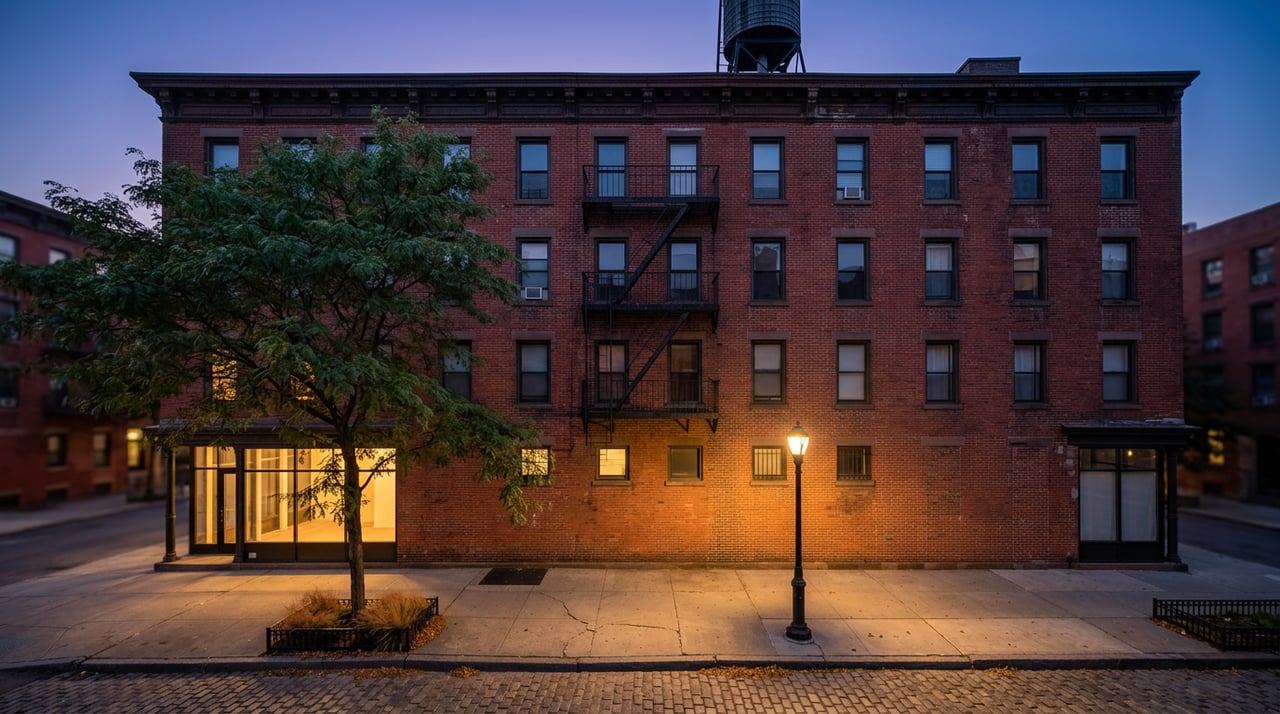
As Commercial Observer reported, Meridian Retail Leasing broker Bobby Ortense said, "They'll be joining a large accumulation of Michelin Guide, star and Bib Gourmand restaurants in the immediate East Village area." He was describing the tenant signing a ten-year lease at 166 First Avenue this year, a restaurant that, as of this writing, does not even have a name yet.
What's striking isn't the ambition. It's the address. The East Village's reputation still runs through St. Marks Place, the stretch everyone from tour guides to national magazines points to when they want to talk about punk history and downtown grit. But walk the neighborhood's actual restaurant openings from this year and a different street keeps showing up: First Avenue, several blocks east of the version of the East Village most visitors think they're touring.
First Avenue's Real Estate Math
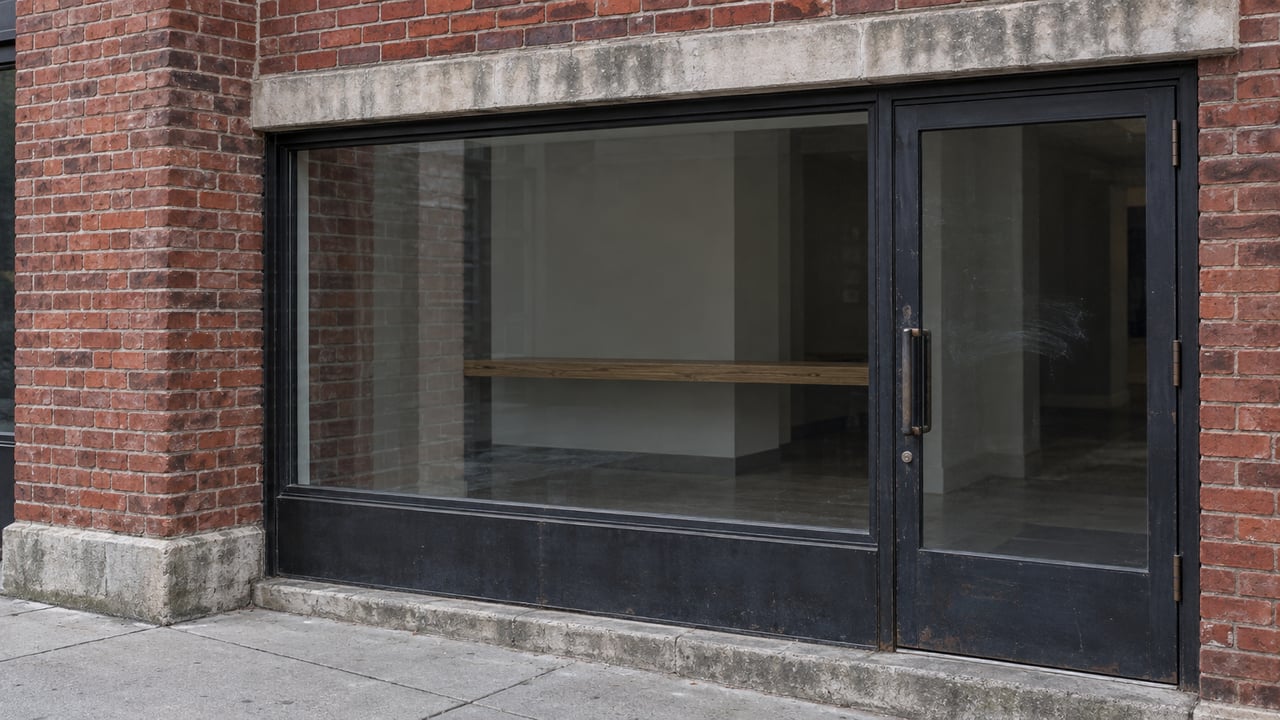
The 166 First Avenue deal is the clearest evidence of where the money is actually going. The tenant is the hospitality team behind C as in Charlie, which opened at 5 Bleecker Street in NoHo in 2022, and Kisa, which debuted at 205 Allen Street on the Lower East Side. Founders David Yun, Steve Choi, and Yong Min Kim were all born in Korea and raised in Atlanta, and their restaurants are built around Korean-American identity rather than a single fixed concept. Their third Manhattan location, still unnamed, signed for 3,300 square feet at 166 First Avenue between East 10th and East 11th Streets, split between 1,800 square feet on the ground floor and 1,500 square feet of basement space. The asking rent was $24,000 a month, a ten-year commitment that only makes sense if the team believes First Avenue foot traffic will hold for a decade, not a season.
They're not alone on the block. A few doors down, Herbie's Burgers, a fast-food chain that started in Albany and expanded through the upstate region, made its way downstate to Greenpoint and then to 109 First Avenue, where it quietly opened at the end of August. Fifth Square, a coffee shop a few storefronts over, is leaning into waffles on a stick in flavors like Dubai chocolate rather than competing on espresso alone. None of these openings are trying to recreate the punk-rock version of the neighborhood. They're betting on a First Avenue that functions like a working commercial strip: burgers, coffee, a Korean-American concept with institutional backing, all within a few blocks of each other.
Compare that to St. Marks Place, which still carries the neighborhood's identity in nearly every tour description and travel write-up, built around a handful of decades-old anchors like Gem Spa's former storefront and the block's tattoo parlors and vintage shops. St. Marks isn't gone and it isn't struggling. But it isn't where the ten-year leases are landing this year. First Avenue is.
Here's how the late-August and September openings break down across the neighborhood:
| Opening | Type | Date |
|---|---|---|
| Herbie's Burgers, 109 First Avenue | Fast food | Late August |
| Hushh | Bar and restaurant | Early September |
| Good Time Country Buffet | Restaurant | September 12 |
| The Astor | Restaurant | September 16 |
Add the still-unnamed 166 First Avenue restaurant, whose team signed a ten-year lease, and you have four restaurant openings plus one lease within roughly six weeks, none of it on St. Marks Place.
What the Village Trip Is Actually Touring
The neighborhood's biggest fall event only sharpens the contrast. The Village Trip, a ten-day festival of music, literature, tours, and food across Greenwich Village and the East Village, runs September 25 through October 4 this year. Its East Village programming leans directly into the version of the neighborhood that made it famous: a walking tour with historian Marc Catapano covering the East Village's underground movements, stopping at CBGB's, St. Mark's Place, and Tompkins Square Park, plus a separate tour of an East 4th Street archive with head archivist Kylie Goetz and a conversation with Muriel Miguel of Spiderwoman Theater. There's also a Village Voices concert featuring new work by composers with ties to the neighborhood.
This is a festival built for the East Village that already has a plaque on it. None of the programming crosses First Avenue to look at what opened this month. That's not a criticism of the festival. It's a genuinely useful signal for anyone trying to understand how the neighborhood works right now: the version of the East Village that gets toured and the version that gets ten-year leases are, for the moment, two different blocks.
The Garden Network Running Underneath Both Stories
There's a third layer to the neighborhood that doesn't show up in either the restaurant openings or the festival brochure, and it's arguably the most resident-specific of all: the community garden circuit. On September 12, NYC Parks GreenThumb ran a Monarchs & Milkweed workshop at Green Oasis Community Garden on East 8th Street, teaching neighbors about the monarch butterfly's multigenerational, roughly 3,000-mile migration and how to build habitat for it locally. A few days earlier, on September 4, 6 & B Garden at Avenue B and East 6th Street hosted a short film night in cooperation with GOH Productions, featuring work from filmmakers Erkstine and Stein, Elmo King, and MM Sera. Tompkins Square Park keeps its own informal stewardship gatherings running in parallel, the kind of low-key upkeep that never makes a festival program but that longtime residents rely on to keep the park usable.
None of this is aimed at visitors. It doesn't need a lease or a ten-day festival calendar. It's the layer of the neighborhood that exists purely because people who live here decided it should, and it runs completely independent of whether First Avenue or St. Marks Place is having its moment.
Three East Villages, One Zip Code
Put these three threads together and the neighborhood right now is really three separate stories running on top of each other. St. Marks Place and Tompkins Square Park are where the East Village gets its history told, this fall through The Village Trip's own programming. First Avenue between roughly East 6th and East 11th Streets is where the actual capital is landing, evidenced by a ten-year lease, a $24,000 monthly rent, and four restaurant openings plus one lease within roughly six weeks. And the community gardens on East 8th Street and Avenue B are where the neighborhood does its quietest, most resident-only work, unrelated to either of the other two.
If you live here, that's a useful map to carry around. The next time someone describes the East Village purely through St. Marks Place nostalgia, or purely through whatever restaurant just got press, you'll know both descriptions are only telling you about one street. The interesting story is the one connecting all three, and this fall it's writing itself in real time on First Avenue.
If you're curious how these shifts in commercial energy tend to show up later in what a block is worth to live on, Ava Anz tracks the East Village block by block. Schedule a consultation to talk through what's changed and what it might mean for your own plans in the neighborhood.